By Allen Lindow, CCIM — Managing Director, IPA Thailand | May 2026
Three things are colliding in Thailand right now that rarely happen at the same time. A trillion-baht infrastructure project is heading to Cabinet. The US just reset its tariff relationship with Thailand. And the manufacturing FDI landscape that shaped the EEC corridor for the past three years is shifting in ways that matter for every location decision being made today.
If you are sitting on a location decision for Southeast Asia, or you own industrial property in the EEC corridor, this is the moment to pay attention.
THE LAND BRIDGE IS A GEOPOLITICAL SIGNAL, NOT A CONSTRUCTION PROJECT
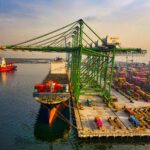
The Ranong-Chumphon Land Bridge gets reported as an infrastructure story. It isn’t. It’s Thailand telling the world it wants to control two maritime access points simultaneously — Andaman Sea on one side, Gulf of Thailand on the other. No other country in Southeast Asia can offer that.The US wants this out of Chinese hands. China wants it as a Malacca bypass. Singapore — which moves roughly 40% of global transshipment — is already in the conversation, watching closely.
This doesn’t close in 2026. But serious capital is already repricing Thailand’s long-term position because of it. That matters for anyone making a 10-year location decision today.
THE TARIFF RESET IS REAL — BUT READ THE FINE PRINT
Thailand has secured a significant tariff reduction agreement with the US — materially improving the economics of producing in Thailand for the US market.
The catch: Thailand agreed to tighten rules of origin enforcement. That means Thai-origin certificates on goods with heavy Chinese input content are going to face real scrutiny. If your factory sits inside a Chinese-dominated industrial estate with Chinese Tier 1 and Tier 2 suppliers next door, your US Customs exposure just increased.
Site selection in Thailand is now a compliance decision as much as a real estate decision.
THE CHINA FDI REALITY: OPPORTUNITY AND RISK IN THE SAME SENTENCE
Walk any major EEC industrial estate today. What you see is a manufacturing ecosystem increasingly shaped by Chinese capital. EVs, electronics, solar, petrochemicals. Chinese FDI drove land values in the EEC corridor to USD 169,000 per rai by mid-2024 — up 17% in one year.
That demand was real. The concentration risk is also real. Thailand’s government knows it and is actively courting Japanese, European, and Singaporean capital to diversify. The BOI’s current incentive structure reflects that.
For manufacturers: Chinese supply chain density in Thailand is an advantage if your inputs are Chinese. It is a liability if your compliance requirements say otherwise. For Thai industrial owners: the market is showing that tenant concentration in one nationality and one trade relationship is a risk worth understanding before your next leasing or disposal decision.
THE BOTTOM LINE
Thailand’s case for manufacturing investment is stronger than it has been since before the 2018 trade war. The infrastructure narrative is serious. The US relationship is improving. BOI incentives are aggressive.
But this is not a simple market right now. The manufacturers and owners who get it right will be the ones working with current, precise intelligence…not the ones reading last year’s market reports.
Allen Lindow, CCIM is the Managing Director of Industrial Property Advisors Thailand. IPA specializes in the EEC corridor and Bangkok industrial zones, serving foreign manufacturers, BOI companies, and Thai industrial owners.
info@ipathailand.com | +66 63 265 3391 | ipathailand.com